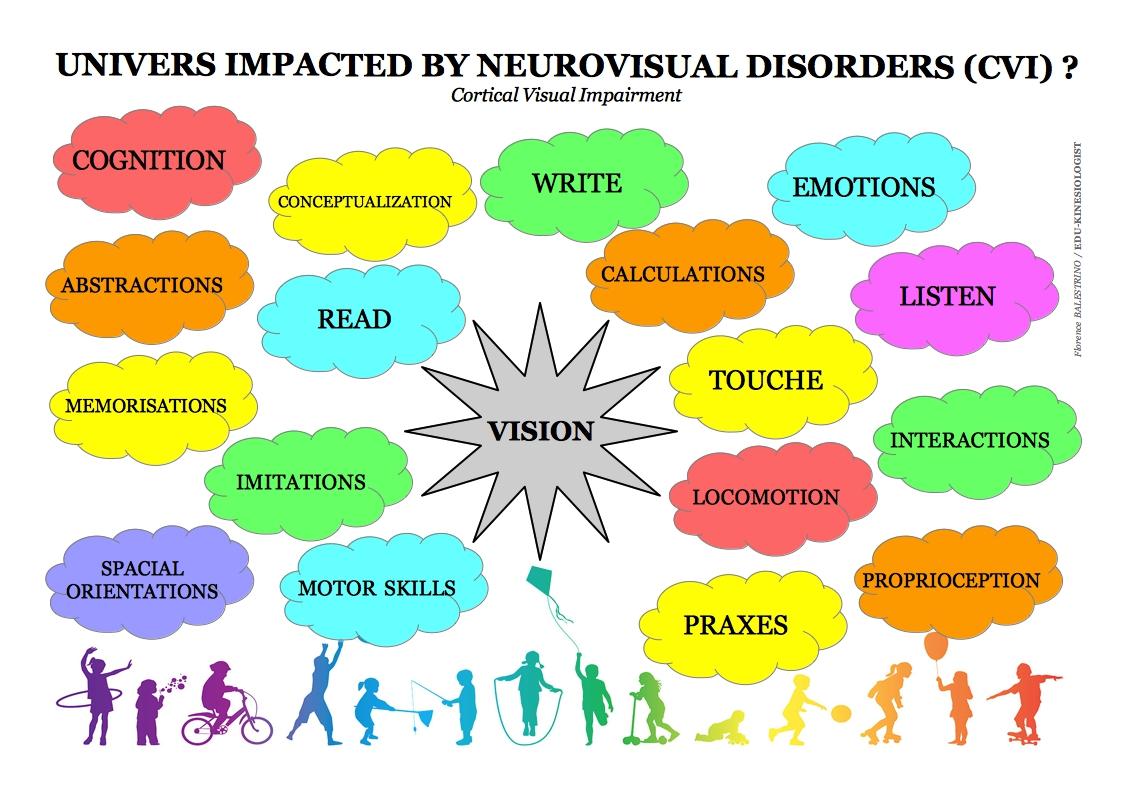
The leading cause of childhood blindness is called cerebral/cortical visual impairment (CVI/CVD).
Epidemiologically, CVI has become the leading cause of childhood visual impairment in high-income countries and is on the rise in low-income countries.
It affects more than 150,000 children in the United States alone.
CVI / CVD is underdiagnosed.
But the good news is that with early intervention, children or adults with CVI/CVD can learn or relearn to see.
In the United States, fewer than 20% of probable CVI/CVD cases receive a diagnosis.
Adults are also affected : in France, one-third of adults who have suffered a stroke have CVI/CVD.
In India, neurovascular bundles (NVLs) are the cause of visual impairment in 33% of cases, and NVLs combined with other eye conditions were observed in an additional 11% (Pehere NK et al., 2019).
Approximately 33% to 58% of visually impaired children worldwide have cortical visual impairment.
In England, 3.4% of primary school children have vision problems related to cortical visual impairment.
At least 40% of the brain is responsible for vision.
This means that brain damage from various causes can lead to visual difficulties due to a range of visual impairments.
(Stroke / Multiple sclerosis, meningitis, encephalitis...)
According to sources (CVI Scotland), it is mentioned that :
one in thirty children could have a neurovisual disorder...perhaps even two children per class...perhaps more?
Children grow up to become adults, and neurovisual disorders stay with them !
Many adults are affected by cortical neurovisual disorders.
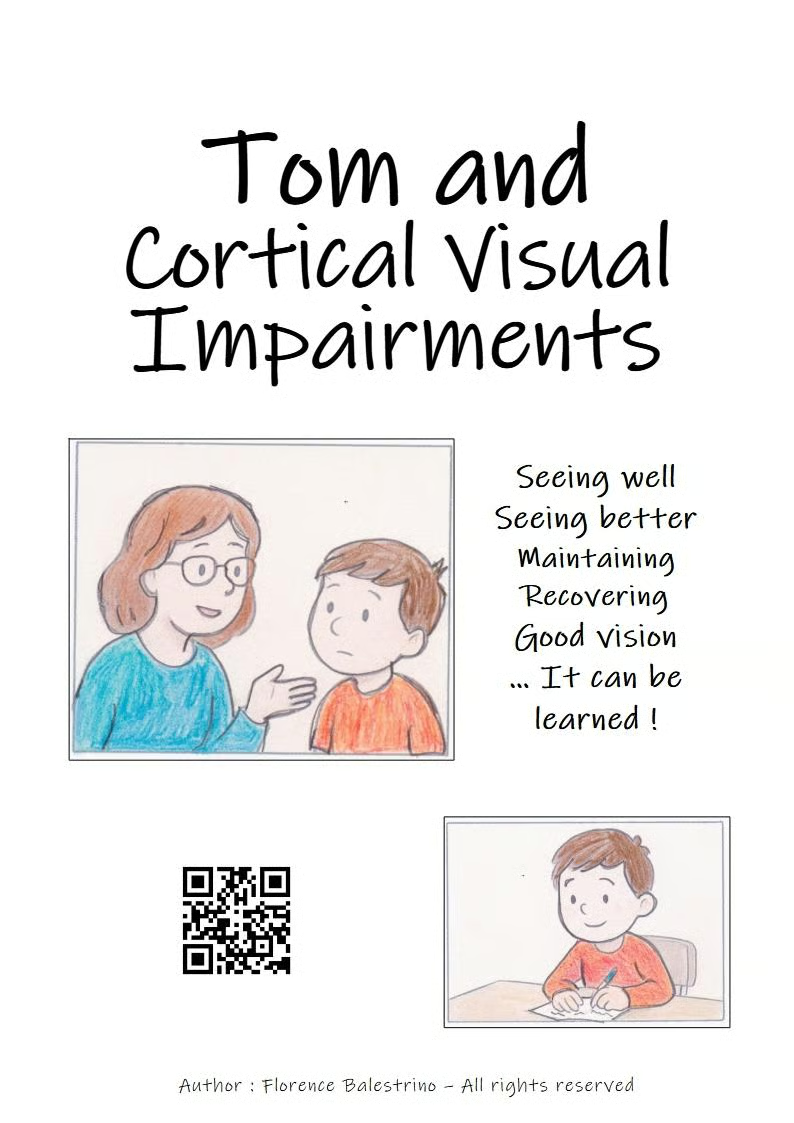
 Bd tom and cortical visual impairment florence balestrino english (2.64 Mo)